


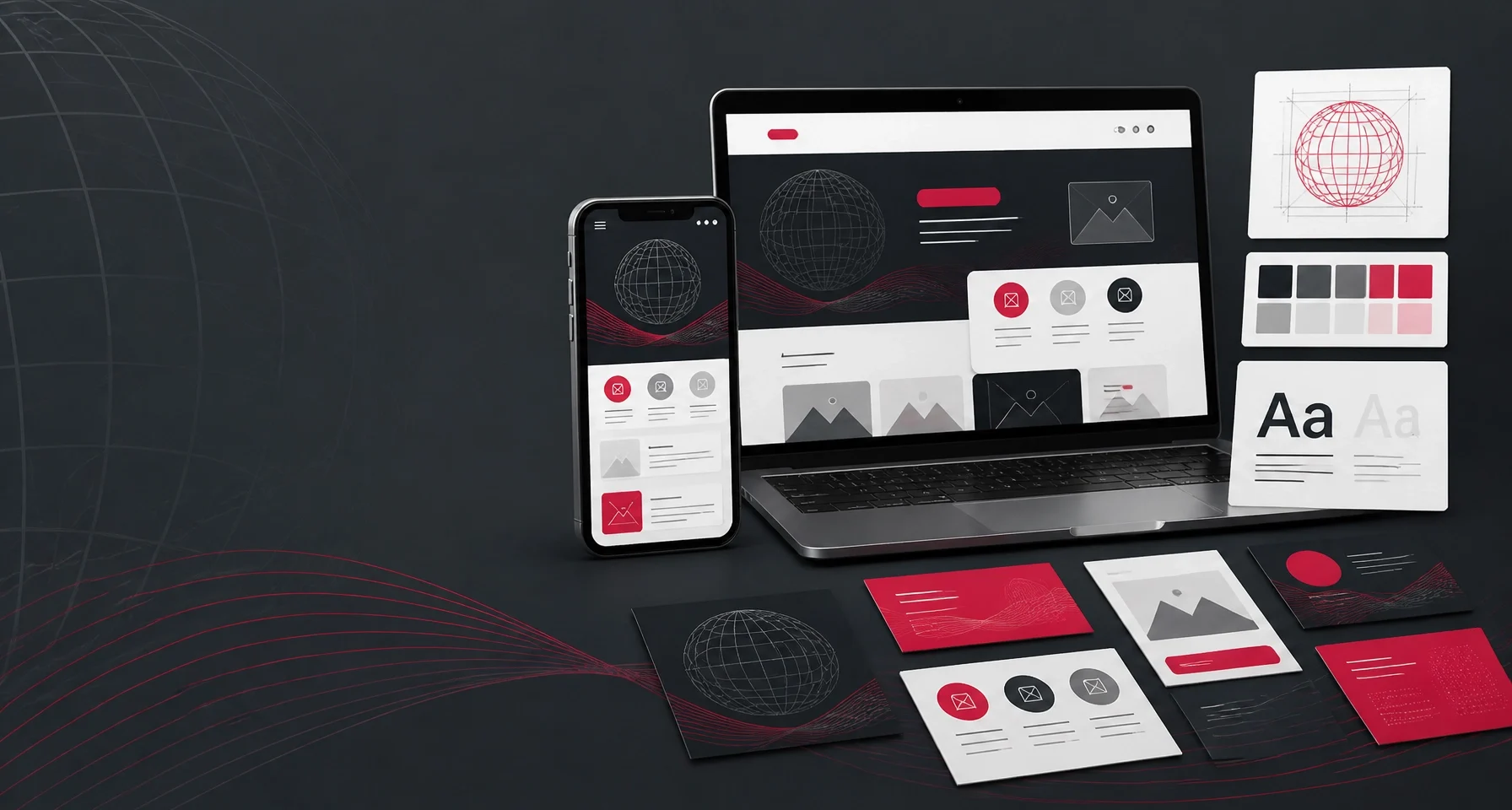
App Design, Web Design, and Graphic Design: What UK Small Businesses Actually Need (and When)
For UK small businesses, design is not decoration. It is a commercial asset.
Your website, mobile app, social media graphics, adverts, and printed materials all shape how customers judge your business. When those experiences feel disconnected, customers notice. When they work together, your brand becomes easier to recognise, trust, and buy from.
But which design service should you prioritise first?
The answer depends on your business model, customer journey, growth stage, and available resources. Most small businesses need a strong website and consistent branding before they need a mobile app. Some businesses, particularly those with repeat customers or complex booking journeys, will benefit from app design earlier.
Here is how the three services differ, how they work together, and what UK small businesses should do next.
THE THREE DESIGN SERVICES EXPLAINED
APP DESIGN: BUILDING REPEAT CUSTOMER EXPERIENCES
App design focuses on how a customer uses a mobile application. It covers the structure, navigation, screens, interactions, notifications, account areas, payment journeys, and overall usability of an Android or iOS app.
A successful app must make frequent actions fast and convenient. That could include:
- Booking a taxi.
- Reordering products.
- Managing appointments.
- Tracking deliveries.
- Using a loyalty scheme.
- Accessing a customer portal.
- Receiving real-time updates.
App design is most valuable when customers interact with your business repeatedly. It creates a direct channel on the customer’s device and can support push notifications, account management, loyalty features, and personalised experiences.
However, an app is not automatically the right first investment. You need a clear reason for customers to download it and return to it. If your customers only need basic information or make occasional enquiries, a well-designed website will usually deliver greater value with less friction.
A global marketing firm creates custom app solutions based on specific business requirements. The focus is not simply on producing attractive screens. It is on designing a useful, scalable customer experience that supports measurable business outcomes.

WEB DESIGN: CREATING YOUR DIGITAL FOUNDATION
Web design covers the structure and appearance of your website. It includes page layouts, navigation, typography, imagery, calls to action, forms, responsive behaviour, accessibility, and the user journey from first visit to conversion.
For most UK small businesses, web design should come first.
Your website is available 24/7. It explains your offer, answers customer questions, builds credibility, supports search visibility, and generates enquiries while you focus on running the business.
A high-performing website should:
- Explain what you offer within seconds.
- Make your location and service area clear.
- Work smoothly on mobile devices.
- Direct visitors towards one obvious next step.
- Load quickly and remain stable while loading.
- Present reviews, qualifications, case studies, or other trust signals.
- Make contact, booking, or purchasing straightforward.
- Provide a strong foundation for SEO and digital advertising.
Good web design is not about adding more effects. It is about removing confusion. Customers should know who you help, what you provide, why they should trust you, and how to take action.
A professional digital marketing agency UK partner should treat web design and marketing as connected disciplines. Driving traffic to a website that is slow, unclear, or difficult to use wastes budget. The website must be designed to turn attention into enquiries, bookings, and sales.
GRAPHIC DESIGN: MAKING YOUR BRAND RECOGNISABLE
Graphic design communicates your business visually. It covers logos, brand guidelines, colour palettes, typography, social media assets, brochures, presentations, adverts, icons, email graphics, and promotional materials.
Graphic design answers a vital question: how should your business look and feel wherever customers encounter it?
A strong visual identity creates consistency across the following:
- Your website.
- Your mobile app.
- Google Business Profile imagery.
- Social media posts.
- Paid advertising.
- Email campaigns.
- Vehicle livery and signage.
- Printed marketing materials.
- Sales documents and proposals.
Graphic design should support your message rather than compete with it. A clear logo, controlled colour palette, readable typography, and purposeful imagery help customers recognise your business quickly.
For businesses without established brand guidelines, graphic design is often the first step towards consistency. For businesses with an existing identity, a design review can identify where the brand is becoming inconsistent or outdated.
A global marketing firm's wider branding services help businesses establish a stronger visual foundation. The result is a brand that looks more professional across every customer touchpoint.
WHY CONSISTENCY ACROSS ALL THREE MATTERS
Customers do not experience your business in separate departments. They experience one brand.
They may discover you through social media, visit your website, download your app, receive an email, and speak to your support team within the same week. If the colours, language, layouts, and tone change dramatically between each interaction, confidence declines.
Consistency creates three commercial benefits.
RECOGNITION
Repeated visual elements help customers remember your business. Consistent colours, typography, imagery, and layouts make your brand easier to identify in a crowded market.
TRUST
Professional consistency signals control and reliability. A polished website followed by an outdated app or inconsistent social media graphics creates doubt. Customers may question whether the business is equally inconsistent behind the scenes.
LOWER FRICTION
When the same design patterns appear across your website and app, customers learn how to use your services faster. Familiar buttons, menus, forms, and language make the next step more predictable.
This is especially important for service businesses. Whether someone is booking a minicab, requesting a quote, arranging maintenance, or purchasing from an online shop, every unnecessary step creates an opportunity for abandonment.
HOW DESIGN BOOSTS CONVERSIONS AND SEO
DESIGN IMPROVES CONVERSION
Conversion-focused design guides visitors towards a specific action. That action might be calling your team, submitting a form, booking an appointment, requesting a quote, or completing a purchase.
Effective design places important information in the right order:
- The customer sees a clear description of the service.
- They understand the benefit.
- They find evidence that the business is credible.
- They see an obvious call to action.
- They complete the action with minimal effort.
Short forms, clear navigation, mobile-friendly buttons, readable content, and reassurance near key calls to action all reduce friction.
Design also improves advertising performance. When a paid advert, social media post, landing page, and enquiry form share the same visual language, the customer journey feels connected rather than interrupted.
DESIGN SUPPORTS SEO
Search engine optimisation is not only about keywords. Search engines also need to understand whether a page provides a useful experience.
Good design supports SEO by improving:
- Mobile usability.
- Page structure and heading hierarchy.
- Internal navigation.
- Content readability.
- Accessibility.
- Engagement with important page elements.
- Technical performance.
Core Web Vitals are particularly important. They measure real aspects of user experience, including loading performance, responsiveness, and visual stability.
The main benchmarks include:
- Largest Contentful Paint: how quickly the main content appears.
- Interaction to Next Paint: how quickly the page responds to user interaction.
- Cumulative Layout Shift: whether content unexpectedly moves during loading.
Large unoptimised images, excessive animation, poorly planned scripts, and unstable layouts can damage both user experience and performance. Our guide, Your Website Is Too Slow? 7 Core Web Vitals Fixes That Will Boost Your SEO Overnight, explains practical ways to improve these areas.
Design and technical development must work together. A visually impressive website that loads slowly is not a successful website.

WHAT UK SMALL BUSINESSES SHOULD PRIORITISE
PRIORITY ONE: A FAST, MOBILE-FIRST WEBSITE
Start with a website that clearly communicates your offer and supports your main commercial objective.
A local business may need calls and quote requests. An online retailer may need product discovery and checkout. A hospitality business may need bookings. A transport company may need real-time dispatch and customer communication.
The design must reflect the business model.
PRIORITY TWO: A CONSISTENT BRAND SYSTEM
Create the essential graphic design assets that keep your communications aligned:
- Logo variations.
- Core colours.
- Primary and secondary fonts.
- Image direction.
- Social media templates.
- Button and graphic styles.
- Tone-of-voice guidance.
This does not need to become a complicated brand manual. A practical, usable system is more valuable than a large document that nobody follows.
PRIORITY THREE: SEO AND CONTENT STRUCTURE
Once the website foundation is in place, invest in SEO services for small business that improve visibility for the searches your customers actually make.
Priorities include:
- Clear service pages.
- Local search optimisation.
- Relevant page titles and headings.
- Helpful content.
- Internal linking.
- Fast page performance.
- Accurate business information.
- Conversion tracking.
Marketing activity should not be fragmented. Our article, Why Your Marketing Feels Like a Chore: The Truth About Fragmented Search and How to Fix It, explains why an integrated approach is more efficient than managing disconnected channels.
PRIORITY FOUR: SOCIAL MEDIA DESIGN
Social media gives your brand frequent visibility. Use consistent templates, clear messaging, and strong visual hierarchy to make posts recognisable and easy to understand.
Our social media marketing services help businesses create a more consistent presence and connect social activity with wider marketing objectives.
PRIORITY FIVE: APP DESIGN WHEN THE BUSINESS CASE IS CLEAR
Consider app design when you have repeat users, regular transactions, customer accounts, loyalty requirements, push notification needs, or functionality that a website cannot deliver efficiently.
A global marketing firm's app development services provide custom solutions for businesses that need more than a standard website. App design, development, and integration are planned around the customer journey and operational requirements.
A PRACTICAL DESIGN ROADMAP
For most UK small businesses, the right sequence is:
Stage 1: Clarify the business goal. Decide whether you need more enquiries, bookings, sales, repeat visits, or brand credibility.
Stage 2: Establish the visual foundation. Define the core brand assets and design rules.
Stage 3: Build or improve the website. Prioritise mobile usability, clear calls to action, accessibility, and Core Web Vitals.
Stage 4: Connect marketing channels. Align SEO, social media, email, and paid campaigns with the website experience.
Stage 5: Introduce app design where it adds measurable value. Build an app when it improves repeat engagement, convenience, retention, or operational efficiency.
DESIGN THAT DELIVERS BUSINESS VALUE
App design, web design, and graphic design are different services, but they should operate as one connected system.
For most UK small businesses, a fast and conversion-focused website is the essential starting point. Graphic design strengthens recognition and trust across every channel. App design becomes the next step when repeat usage and advanced functionality justify the investment.
Global Marketing Firm provides UI/UX, web, app, and marketing expertise through custom design solutions built around your objectives. With a 100% on-time delivery record, an 85% repeat business rate, and more than 10 years of experience supporting businesses across sectors, we listen, understand, and deliver.
The outcome is not simply a better-looking brand. It is a clearer customer journey, stronger search performance, improved conversion potential, and a scalable digital presence built for sustainable growth.
Request a consultation with Global Marketing Firm and identify the design priorities that will make the greatest commercial impact for your business.